Table of Contents
- Introduction: The "AI Hopping" Problem, Solved
- What Is Mixture-of-Agents?
- Why Only Genspark Could Build This
- Side-by-Side: Manual Multi-AI vs. MoA
- What Each AI Model Brings to the Table
- Practical Use Cases for Developers
- How to Use It
- Limitations to Keep in Mind
- Conclusion: From Choosing AI to Orchestrating AI
Introduction: The "AI Hopping" Problem, Solved
You get an answer from ChatGPT, then wonder how Claude would respond — so you open a new tab and paste the same prompt. Then you think, "Let me see what Gemini says," and open yet another tab. Copy. Paste. Repeat.
This "AI hopping" is a legitimate strategy for drawing on each model's strengths. But juggling multiple tabs, copying the same prompt over and over, and then manually synthesizing the responses is tedious, time-consuming work.
A feature has arrived in Genspark that eliminates this friction entirely. It's called "AI Chat Mixture-of-Agents."
What Is Mixture-of-Agents?
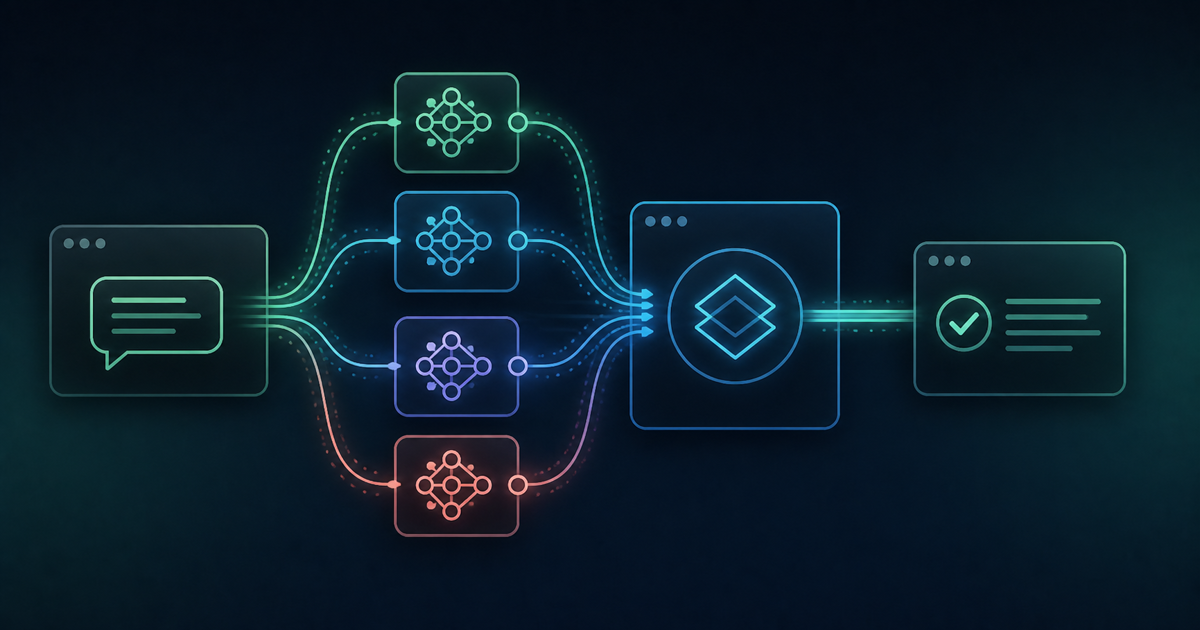
"Mixture-of-Agents (MoA)" is an architecture concept that has been gaining traction in AI research. Rather than relying on a single model, MoA coordinates multiple different AI models so that each one's strengths contribute to a higher-quality, more reliable response.
Genspark has brought this concept to life at the user-interface level. You type a question once, and the system simultaneously sends your query to multiple leading AI models — Claude, Gemini, GPT, and more. A dedicated aggregation agent then reads all the responses, cross-checks accuracy, identifies contradictions, and extracts the best elements from each to produce a single, unified high-quality answer.
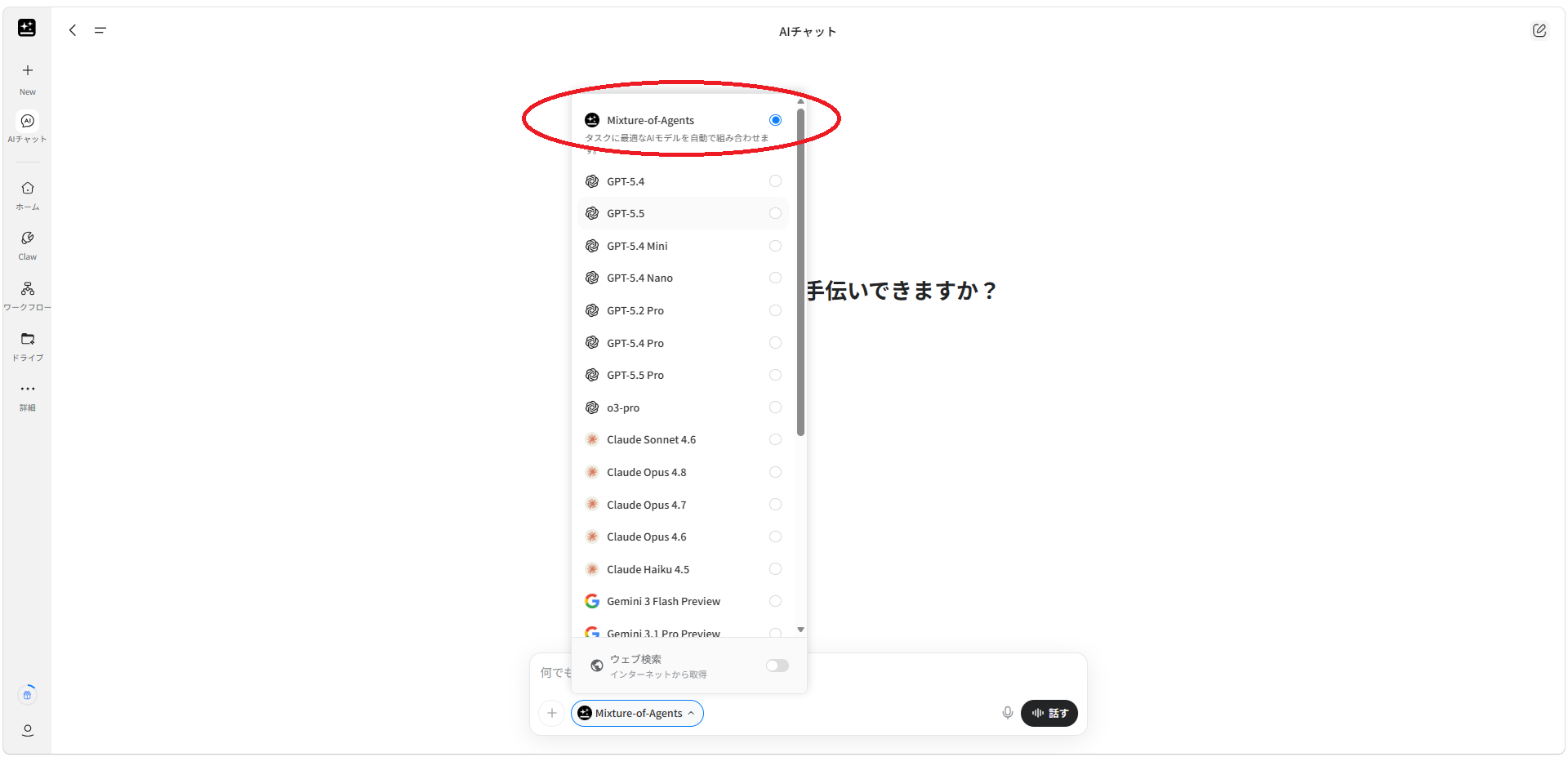
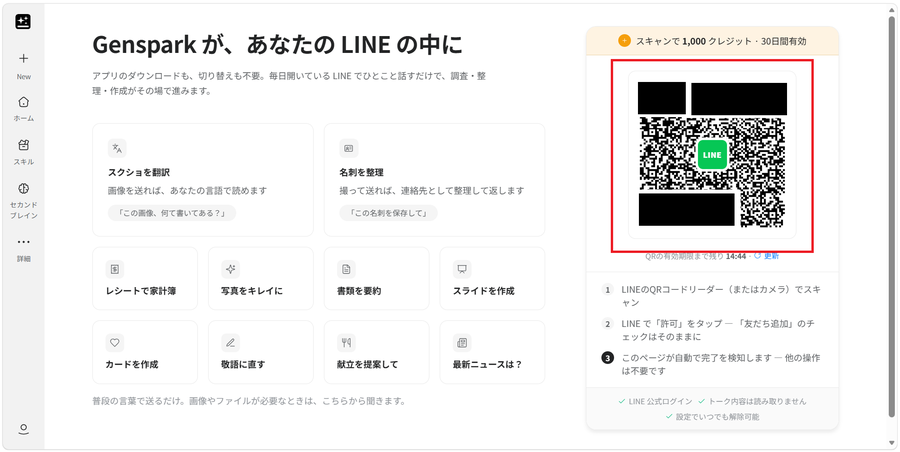
The screenshot above shows the actual model selection panel. Open the model selector at the bottom of the AI Chat interface, and "Mixture-of-Agents" appears at the very top — with GPT-5.4, GPT-5.5, Claude Sonnet, Claude Opus, Gemini, and other leading models listed below it.
The system reads each model's response, cross-checks factual accuracy, flags contradictions, and extracts the best parts of each answer before synthesizing a final response. This is the critical difference from a simple comparison display.
Why Only Genspark Could Build This
OpenAI has GPT, Anthropic has Claude, Google has Gemini — each company treats its own model as the pinnacle of AI capability. Because of this, the idea of integrating a competitor's model into your own service and "collaborating with the competition" is structurally unlikely to arise, for both business and competitive reasons.
Genspark occupies a completely different position. Genspark does not develop its own AI model. At first glance this might seem like a weakness — but it is actually Genspark's greatest strength and the fundamental reason MoA could be built at all.
With no proprietary model to favour, Genspark can treat Claude, GPT, and Gemini as equal partners and design for extracting the genuine best from each. Think of Genspark as a fair referee and master orchestra conductor in the AI industry — not playing an instrument itself, but drawing the finest performance from the world's best players.
This "model-agnostic" stance — independent of and neutral toward any specific model — is precisely what makes it possible to call on each company's flagship AI on equal footing and orchestrate them in the way that benefits users most. You can check the available plans on the Genspark Pricing Page (pricing details are further down the page).
Side-by-Side: Manual Multi-AI vs. MoA
Comparing actual task times reveals just how dramatic the efficiency gains are.
| Task | Manual Multi-AI | Genspark MoA |
|---|---|---|
| Open AI services | 1–2 min (multiple tabs) | 10 sec |
| Enter & send the question | 3–5 min (copy-paste to each) | 30 sec |
| Read and compare responses | 5–10 min | 3–5 min (already synthesised) |
| Synthesise responses manually | 5–10 min | Not needed |
| Total | ~15–30 min | ~5–6 min |
For developers who rely on multiple AIs daily for research and problem-solving, this compounds into enormous time savings when measured week-by-week or month-by-month.
What Each AI Model Brings to the Table
The power of MoA comes from the fact that each model's unique strengths complement the others.
Claude (Anthropic)
Exceptional at crafting well-structured long-form responses and natural writing. Excels at content generation and policy decisions. Known for careful, ethically-considered answers.
GPT (OpenAI)
Strong at code, tool integration, and decomposed thinking. High performance on implementation-heavy tasks. Favours structured problem-solving approaches.
Gemini (Google)
Strong on web-linked, up-to-date information. Broad information-processing capabilities. Works seamlessly with the Google ecosystem.
In Genspark's MoA system, these distinct strengths are brought to bear simultaneously on a single query. The aggregation agent then combines the best elements from each model's response into a final answer.
Practical Use Cases for Developers
Technology selection and decision-making: For questions like "Should I choose React or Vue?" or "What's the difference between AWS and GCP?", MoA draws on each AI's distinct perspective to weigh pros and cons — giving you less-biased material for your decision.
Complex debugging: When you hit a mysterious error and a single AI can't crack it, MoA sends the problem to multiple models simultaneously, each attacking it from a different angle. The odds of finding a solution increase dramatically.
Researching new technologies and libraries: Ask about a cutting-edge topic like "Rust web framework selection" or "LangGraph vs. AutoGen," and Claude handles conceptual design philosophy, GPT supplies code samples and implementation notes, and Gemini fills in the latest GitHub stars and community trends — delivering something close to a comprehensive review in a single shot.
Code review and refactoring: MoA shines here too. Different models tend to flag different types of issues — performance, readability, security — so a single prompt yields a multi-angle code review.
Ask MoA "Which Rust web framework should I use?" and Claude logically breaks down each framework's design philosophy with pros and cons, GPT provides practical code samples and implementation caveats, and Gemini rounds it out with the latest GitHub star counts and community activity — all in one response.
How to Use It
Using Mixture-of-Agents is remarkably simple. In Genspark's AI Chat, click the model selector button at the bottom of the screen and choose "Mixture-of-Agents" at the top of the list. Then ask your question as usual. Multiple AIs spin up in parallel and their results are automatically synthesised for you.
Write structured, specific questions. A format like "For the purpose of X, under condition Y, explain Z" gives each model clear guidance and tends to produce a stronger synthesised answer. Also, don't skip the individual model responses — they often contain perspective you won't find in the unified summary.
Limitations to Keep in Mind
Response time: Sending parallel requests to multiple models and running aggregation takes longer than a single-model query. For time-sensitive work, it's worth switching to a standard chat mode.
Synthesis quality varies: How well the responses integrate depends on the question. For queries requiring very recent information, or highly specialised technical topics, treat the synthesised answer as a starting point and check the individual model responses as well.
MoA is a powerful tool, but when models disagree, a human still needs to make the final call. Don't treat "MoA said so" as ground truth — keep your critical thinking engaged.
Conclusion: From Choosing AI to Orchestrating AI
Genspark's AI Chat Mixture-of-Agents offers a new paradigm for working with AI — one that moves beyond the old frame of "which model is best?" to something more interesting: "how do you orchestrate multiple models for the best possible output?"
Paradoxically, what makes this innovation possible is Genspark's position as a company that doesn't build its own AI model. While OpenAI, Anthropic, and Google compete over whose model is superior, Genspark stands outside that competition — establishing itself as a unique platform that orchestrates all of them fairly.
Until now, the skill was knowing which AI to use for which task, and switching between them. With MoA, the game has changed: the skill is now knowing how to pose questions so that multiple AIs can collaborate and produce the best unified output.
If you've been manually hopping between AIs, this feature will fundamentally change your workflow. Give it a try.
Genspark New Models Overview / Genspark CLI Guide / Genspark AI Search / Effective Prompt Techniques / Genspark vs. Perplexity